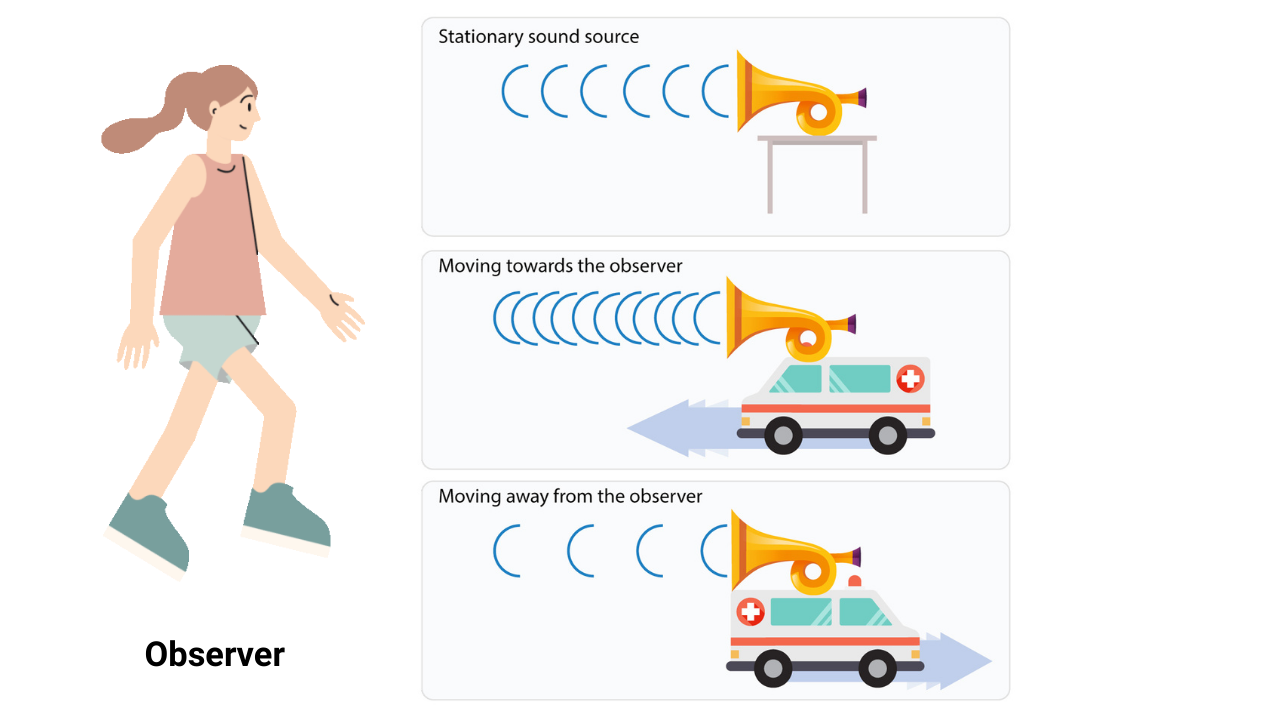
Doppler Effect: Transforming Radar Technology

The Doppler Effect describes the change in frequency or wavelength of a wave in relation to an observer moving relative to the source of the wave. One of the most significant applications of the Doppler Effect is in Doppler radar technology. Doppler radar detects motion by measuring the frequency shift of returning radar signals, which is crucial for accurate speed measurement and weather forecasting. This technology has been instrumental in advancing meteorology, enabling precise tracking of storm systems and providing early warnings for severe weather events.

First Experiments with Doppler Effect

The development of radar technology dates back to the early 20th century. Initial radar systems could only detect the presence and distance of objects. However, integrating the Doppler Effect allowed for the detection of object velocity, vastly improving radar capabilities.

Christian Doppler first presented his principle in 1842 in his paper titled “On the Colored Light of the Double Stars and Certain Other Stars of the Heavens.” His work initially focused on the frequency changes in sound waves, but the principles he described were later found to apply to all types of waves, including light and radio waves.

The Doppler Effect was experimentally confirmed in 1845 by the Dutch scientist Christophorus Buys Ballot. Using a group of musicians playing trumpets on a moving train, Buys Ballot demonstrated the change in pitch predicted by Doppler. This experiment was one of the earliest confirmations of Doppler’s theory.

In the early 20th century, the application of the Doppler Effect expanded significantly. French physicist Henri Becquerel used the Doppler Effect to study gamma rays, and the development of radio technology paved the way for Doppler radar. By World War II, radar technology had become sophisticated enough to incorporate Doppler shifts, allowing for more accurate detection and tracking of moving objects.

Speed Measurement with Doppler Radar

One of the remarkable capabilities enabled by the Doppler Effect in radar technology is precise speed measurement of moving objects. Doppler radar calculates the velocity of an object by analyzing the frequency shift between the emitted and received radar signals. If a radar system emits a signal at 100 MHz and receives a reflected signal at 101 MHz, it indicates that the target is moving towards the radar at a speed that causes this frequency shift.
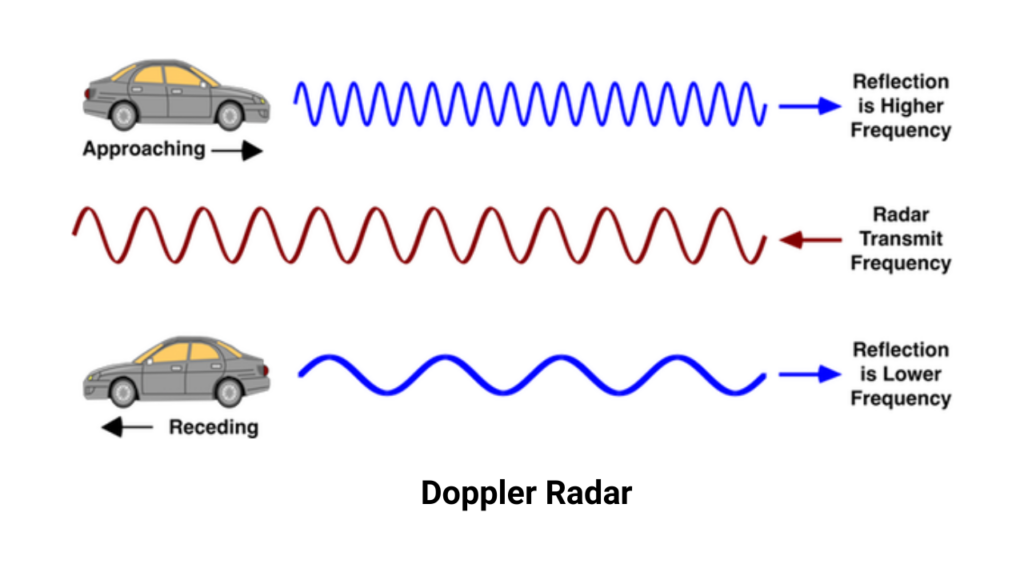
Visualization of Doppler Effect
Applications in Law Enforcement and Traffic Control

Doppler radar is widely used in law enforcement for speed enforcement. Police radar guns measure the speed of vehicles by detecting the Doppler shift in radar waves bounced off moving vehicles. This technology allows police officers to accurately determine if a vehicle is exceeding the speed limit.

Aerospace Applications

In aviation, Doppler radar is used to measure the ground speed of aircraft. By analyzing the frequency shift of radar signals bounced off the ground, aircraft speed relative to the ground can be accurately determined, aiding in navigation and flight control.

Radar and the Doppler Effect

As the radar source moves towards a target, the radar waves become compressed, resulting in an increase in frequency. Conversely, when the radar source moves away from the target, the radar waves are stretched, leading to a decrease in frequency. This change in frequency due to motion is the essence of the Doppler Effect and is crucial in detecting and measuring the speed of objects using radar technology.

Future Directions and Innovations

The Doppler Effect continues to inspire innovations in radar technology. Ongoing research aims to enhance radar systems’ sensitivity and accuracy, particularly in adverse weather conditions and complex terrain. Advances in signal processing and radar engineering promise to further refine Doppler radar applications across various industries, from automotive safety systems to aerospace navigation.

The Doppler Effect’s impact on radar technology underscores its significance in modern science and industry. From meteorology to military applications, this fundamental principle continues to shape our understanding of waves and their interaction with moving objects, driving technological advancements.

Learn more about our Scout Sensor Series.
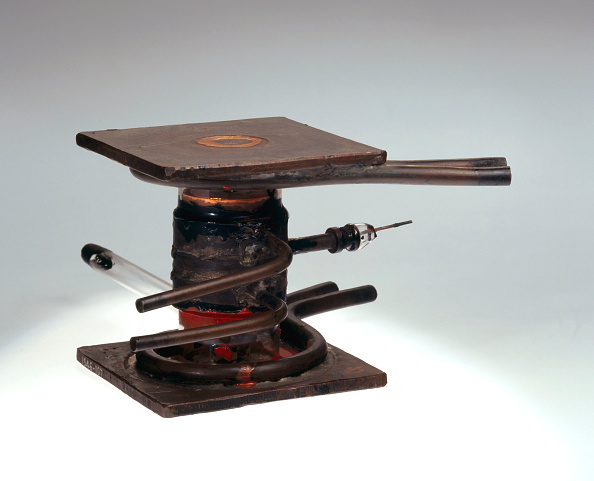
The Magnetron: Revolutionizing Radar and Microwave Technology

The Birth of the Magnetron

In the early 20th century, the limitations of existing radar technology became apparent. The need for more precise and higher frequency signals was crucial for effective operations. Radar systems of the time were bulky and limited in range and accuracy, relying on longer wavelengths that couldn’t provide detailed information about distant objects.The breakthrough came in 1940 when British physicists John Randall and Harry Boot developed the cavity magnetron. This device was capable of generating microwaves at high power levels. The magnetron operates by using a stream of electrons interacting with a magnetic field to generate microwaves. These microwaves are then emitted through resonant cavities within the magnetron, producing powerful and precise high-frequency signals. This innovation was a game-changer, providing the ability to produce small wavelength signals essential for high-resolution radar systems.

The Magnetron and Radar Technology

The development of the cavity magnetron significantly enhanced radar capabilities. Radar systems equipped with magnetrons could detect aircraft and ships with much greater precision. Before the magnetron, radar systems used lower frequency signals that were less effective at detecting smaller objects and were easily scattered by atmospheric conditions. The high-frequency signals generated by magnetrons allowed for smaller and more sophisticated radar systems, capable of discerning finer details and operating more effectively in various environments.

The success of radar technology accelerated advancements in both military and civilian applications. The ability to detect and track objects with high precision had far-reaching implications, leading to innovations in air traffic control, weather forecasting, and navigation systems. The principles of radar technology, powered by the magnetron, became foundational for many modern technological systems.

Magnetron in Everyday Life: The Microwave Oven

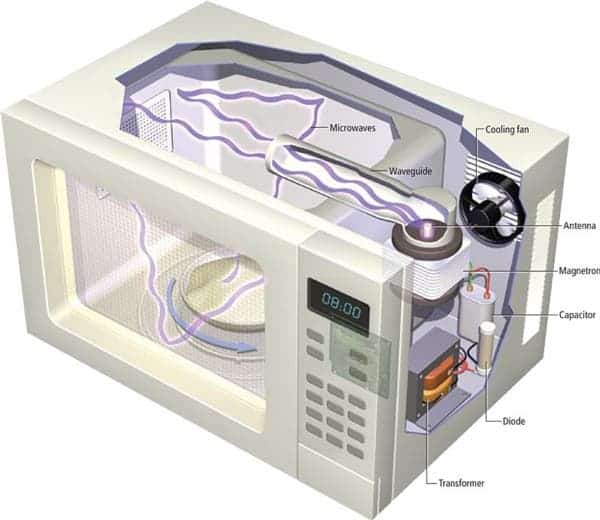
The magnetron also found a revolutionary application in the kitchen. In 1945, Percy Spencer, an engineer at Raytheon, discovered that microwaves generated by a magnetron could cook food quickly and efficiently. This serendipitous discovery led to the development of the first commercial microwave oven, radically changing cooking methods worldwide.


Magnetron in Microwave Oven

The early microwave ovens were large and expensive, but as the technology improved and manufacturing costs decreased, they became more accessible to the general public. Today, almost every household contains a microwave oven, showcasing the magnetron’s versatility and lasting impact.

The Evolution of Radar Technology

The evolution of radar technology did not stop with the initial developments. Advances in digital technology and signal processing have further refined radar capabilities. Modern radar systems utilize sophisticated algorithms and digital signal processing to enhance performance, offering improved accuracy, resolution, and reliability.

These advancements have expanded radar’s applications beyond traditional uses. In civilian aviation, radar ensures the safe and efficient management of air traffic. In meteorology, radar systems track weather patterns, helping predict storms and other severe weather events. In automotive technology, radar systems assist in adaptive cruise control and collision avoidance, contributing to vehicle safety.

Conclusion

The invention of the magnetron was a revolutionary milestone that transformed radar technology and had a profound impact on both military and civilian life. Its role showcased its potential for high-precision detection and tracking, while its adaptation into microwave ovens demonstrated its versatility. As radar technology continues to evolve, the legacy of the magnetron endures, highlighting the ongoing importance of this groundbreaking invention. The magnetron’s journey from pioneering technology to everyday convenience underscores its significance and enduring relevance in the modern world.

Christian Hülsmeyer’s Historic Telemobiloscope Demonstration

Hülsmeyer and the Inspiration Behind Radar

Christian Hülsmeyer, a German inventor, was inspired by a tragic boating accident on the Rhine, where two ships collided in foggy conditions, resulting in several fatalities. This incident spurred Hülsmeyer to develop a solution for preventing such tragedies caused by poor visibility. His quest led to the creation of the “Telemobiloscope,” the first patented device to use radio waves for detecting the presence of distant objects, such as ships.

How the Telemobiloscope Worked

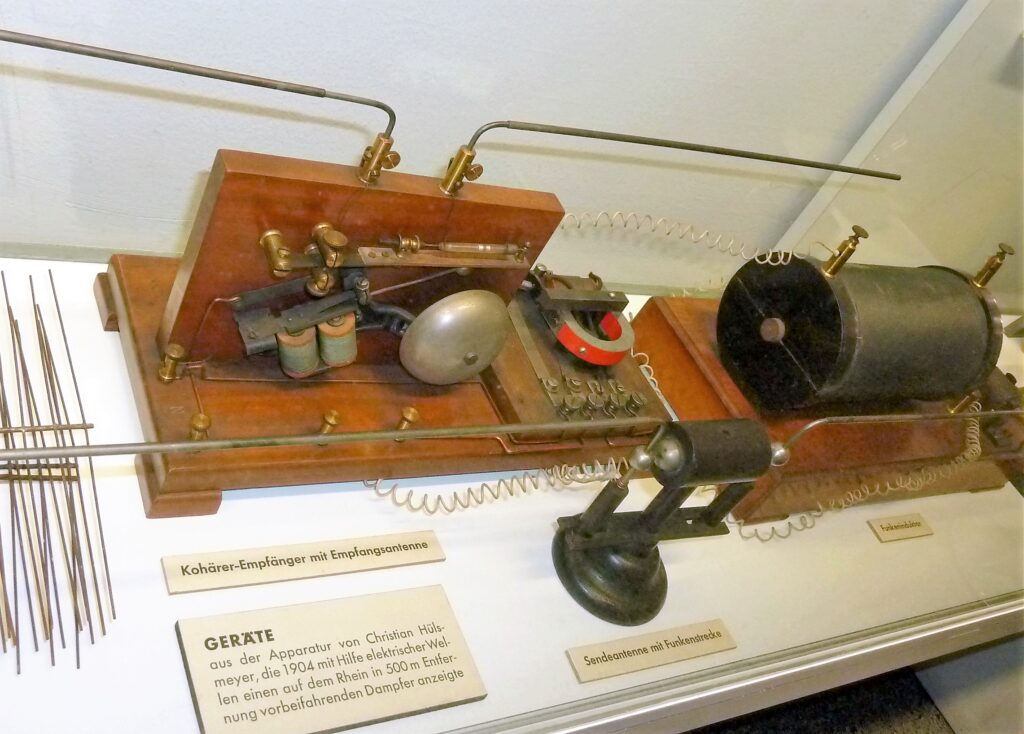
The Telemobiloscope was an ingenious apparatus composed of a large wooden box, a spark-gap transmitter, two simple parabolic antennas, and a crude detector. The transmitter generated radio-frequency electromagnetic waves, and the antennas, positioned on a movable platform, could rotate 360 degrees. When the transmitted signals hit an object and reflected back to the receiver, an electric bell inside the device would ring, indicating the object’s presence. Hülsmeyer also devised a toothed-wheel mechanism called Kompass, allowing the user to determine the direction of the detected object.

The Historic Demonstration

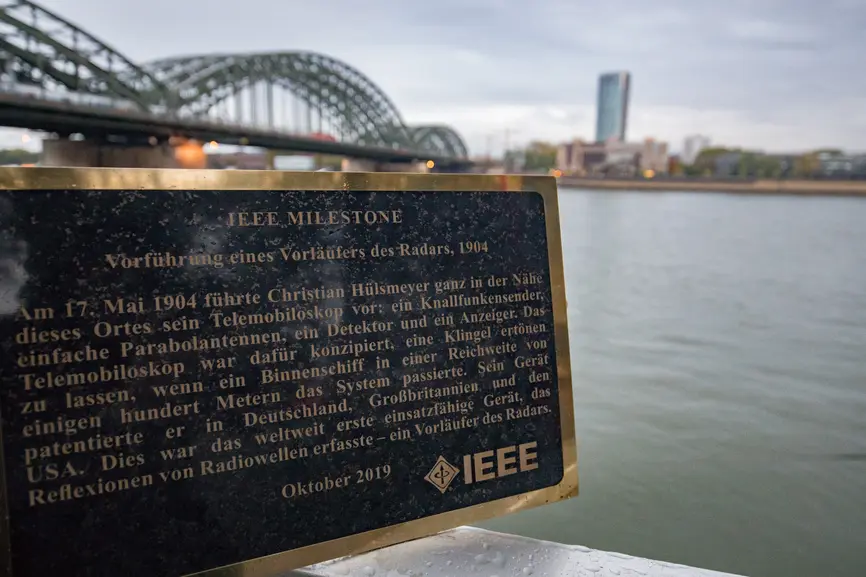
On May 17, 1904, Hülsmeyer publicly demonstrated the Telemobiloscope in the courtyard of the Dom Hotel in Cologne. Using a metal gate as the target, Hülsmeyer proved his device could detect objects even when not directly visible. This demonstration was widely reported, showcasing the practical applications of his invention and earning him significant acclaim.

Breakthrough at the Maritime Conference

Following the success in Cologne, Hülsmeyer presented the Telemobiloscope at a maritime safety conference in Scheveningen, Netherlands. During a tour aboard the ship-tender Columbus in the Rotterdam harbor, his device successfully detected passing vessels, impressing shipping industry leaders and highlighting radar’s potential for preventing maritime collisions.

Challenges and Legacy

Despite the initial excitement, Hülsmeyer faced financial difficulties in further developing and commercializing the Telemobiloscope. He eventually sold the rights to his invention to the Trading Company Z.H. Gumpel in Hannover. Subsequent demonstrations faced technical challenges, and competition from Marconi’s Wireless Telegraph Company hindered widespread adoption of his radar technology.

However, Hülsmeyer’s pioneering work laid the foundation for future developments. In 1953, at a radar conference in Frankfurt, Hülsmeyer and Robert Watson-Watt, a key figure in British radar development, were both honored. Watson-Watt acknowledged Hülsmeyer’s contribution by saying, “I am the father of radar, whereas you are its grandfather.” Today, Christian Hülsmeyer is celebrated for his groundbreaking invention, which has had a lasting impact on navigation and safety technologies.